October is the perfect time to blend festive fun with early learning. While the Halloween season is often filled with costumes and candy, it also offers rich opportunities to support your child’s development—if you know where to look.
Pumpkin patches, crafts, and themed sensory play aren’t just entertaining. They help young children build motor skills, develop language, explore cause and effect, and strengthen their social-emotional awareness. With a little intention, Halloween activities can become meaningful learning experiences that support your child’s growth.
Here are five development-rich activities that you can enjoy with your little pumpkin this October—each one packed with purpose and playful learning.
Pumpkin Patch Learning: What to Do Beyond Photos
A trip to the pumpkin patch might seem like a simple seasonal outing—but it’s also a goldmine for hands-on learning. As you walk through the rows, encourage your child to touch, lift, and explore the pumpkins. Ask questions: “Which one is the biggest?” “Can you find a bumpy one?” “How does this one feel—smooth or rough?”
These conversations build observation skills, encourage descriptive language, and strengthen your child’s growing vocabulary. They also support critical thinking. When you ask your child to choose the “best” pumpkin, you’re inviting them to compare, evaluate, and make independent decisions.
Physically, pumpkin picking is a full-body experience. Lifting, rolling, pushing, and carrying pumpkins builds gross motor strength and coordination. Letting your child pull a wagon or help carry a small pumpkin offers a real-world opportunity to practice balance, muscle control, and teamwork.
And don’t forget the social-emotional benefits. Giving your child the responsibility to choose “their” pumpkin can be a big confidence booster—and a chance for you to say, “I trust your choice!”
Pumpkin-Sized Tip: Let your child explore pumpkins of all sizes—not just the prettiest or roundest. Look for ones with unusual shapes, colors, or textures. That’s where the curiosity and conversation really begin.
Halloween Crafts That Build Fine Motor Skills
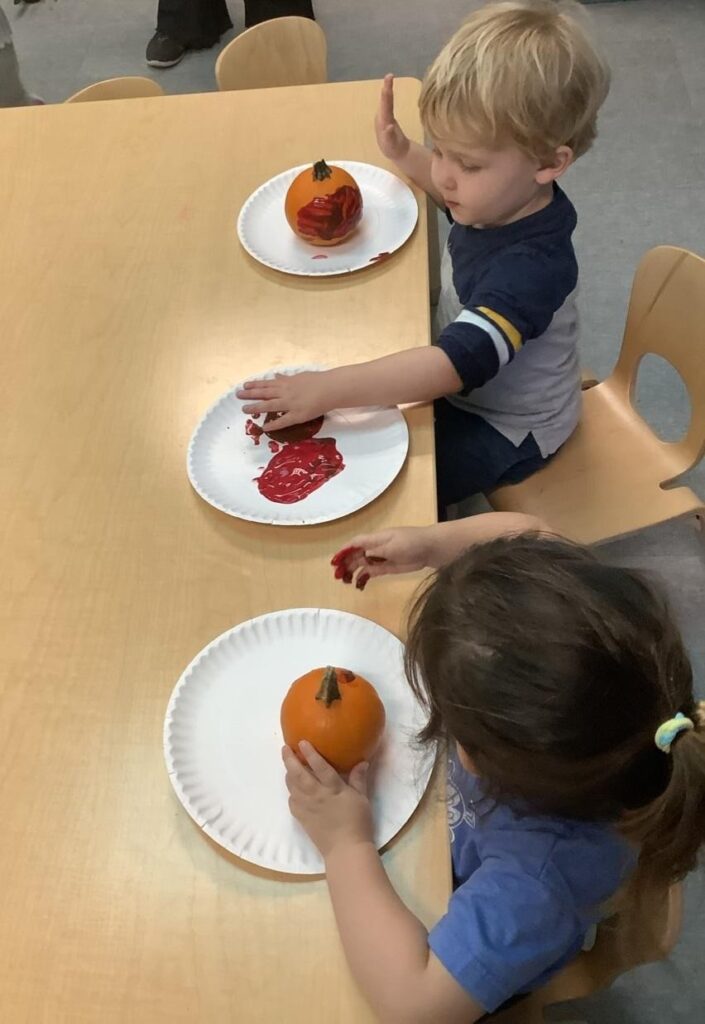
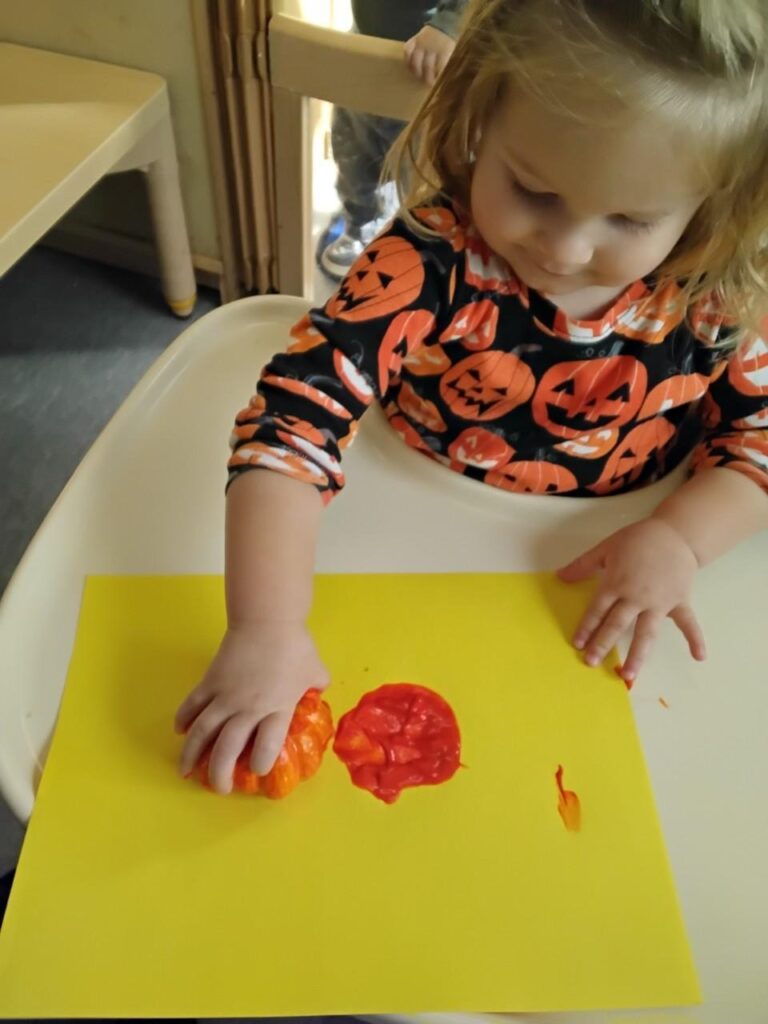
Craft time isn’t just a fun way to decorate the fridge—it’s a powerful way to build the fine motor muscles children need for everyday independence. Activities like gluing, cutting, peeling, and squeezing build hand strength, finger coordination, and wrist control.
Halloween brings the perfect excuse to dive into craft supplies. Your child can:
● Cut out pumpkin shapes from orange paper
● Use pom-poms and googly eyes to make spiders
● Tear cotton balls for a ghost’s “fur”
● Twist pipe cleaners into skeletons or bats
● Use dot markers or stamps to decorate haunted houses
All of these tasks help children develop the same skills they’ll need later for writing, zipping a jacket, or opening their lunchbox. Plus, when your child proudly shows off a crooked ghost or lopsided pumpkin, they’re also practicing confidence, self-expression, and perseverance.
It’s okay if it’s messy. It’s okay if the eyes don’t match. What matters is that your child is using their hands and brain to create something on their own.
Parent Tip: Keep a small bin of seasonal craft supplies on hand—colored paper, glue sticks, foam shapes, stickers, and crayons. Offer them during quiet times or after a nap to encourage creativity without needing a whole setup.
Sensory Play Ideas: Slime, Seeds & Spooky Textures
Sensory play is more than just messy fun—it’s a foundational part of early childhood development. Exploring textures, temperatures, and materials helps children build neural connections in the brain, regulate their emotions, and engage with the world using all five senses.
Halloween-themed sensory play adds a layer of excitement and engagement. Try these easy and developmentally rich ideas:
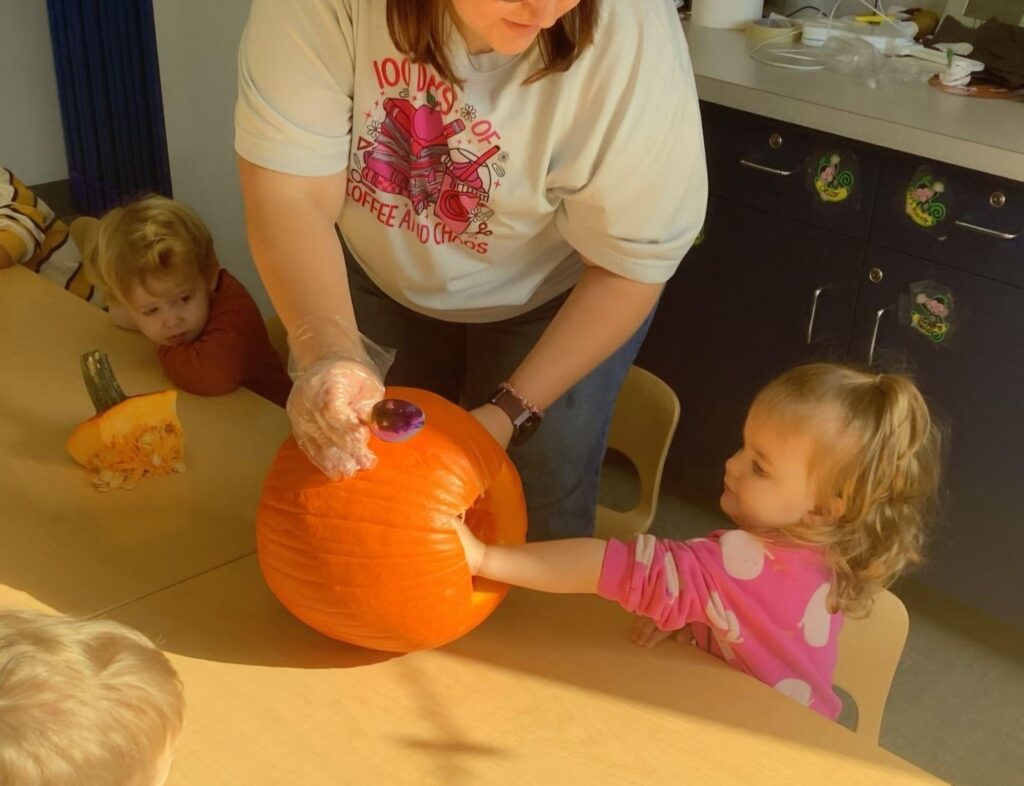
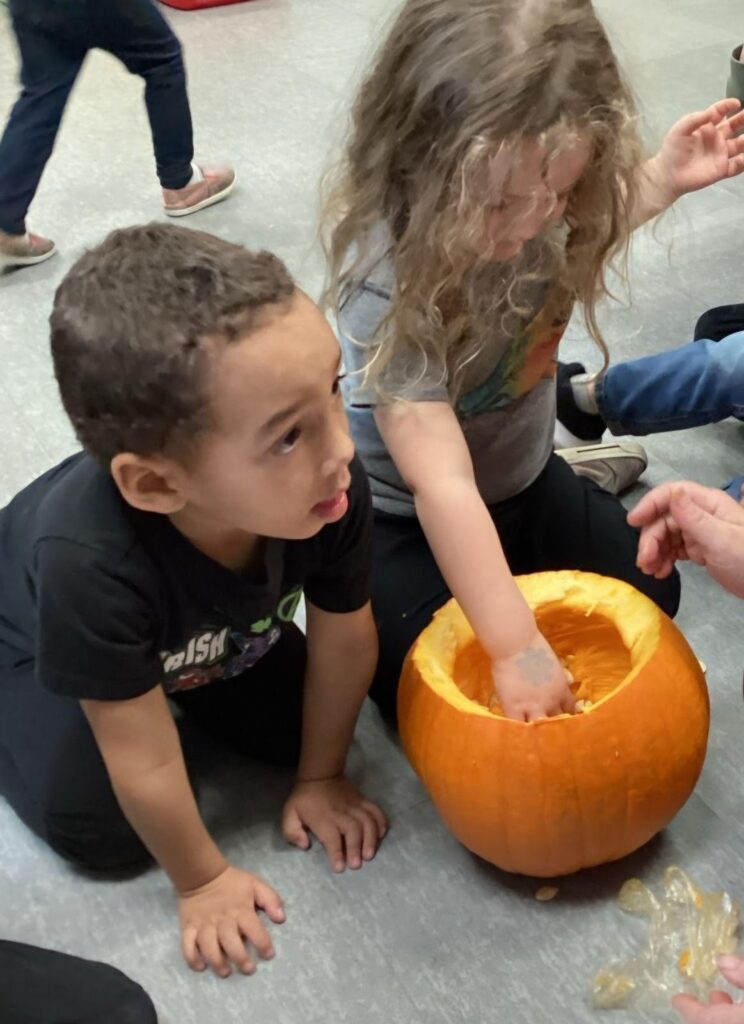
● Pumpkin seed scooping: Cut open a pumpkin and let your child explore the inside. Talk about how it feels—slimy, stringy, cold. Then wash and dry the seeds to use in counting or sorting games.
● Spooky spaghetti: Cook pasta and add a few drops of food coloring. Let your child squish, squeeze, and scoop with small tongs or spoons.
● Dry sensory bins: Fill with black beans, dyed rice, or dry pasta, and add miniature pumpkins, plastic spiders, toy bats, or Halloween erasers. Include small tongs, cups, and spoons for scooping and sorting.
These activities promote calm, focus, and coordination. They also help children learn to describe their experiences—“It’s squishy!” “It smells funny!”—which supports both cognitive and language development.
Make Your Own Fluffy Ghost Dough!
Perfect for hands-on Halloween sensory fun at home.
You’ll need:
● 2 cups all-purpose flour
● 1/2 cup vegetable oil (or baby oil for extra softness)
● A few drops of vanilla extract or essential oil (optional)
● White glitter or confetti (optional)
Instructions:
1. Pour the flour into a large mixing bowl.
2. Slowly mix in the oil. Use your hands or a spoon to blend until soft and moldable. 3. Add scent or glitter if you like.
4. Store in an airtight container when not in use.
Learning Bonus: Fluffy dough builds hand strength, encourages creativity, and supports sensory regulation. Add plastic eyeballs, cotton balls, or Halloween cookie cutters for extra ghostly fun!
Nature Walks with a Fall Scavenger Hunt
October is the perfect time to turn a simple walk into a magical learning experience. With leaves changing, squirrels scampering, and Halloween decorations popping up, a fall-themed scavenger hunt turns everyday moments into early learning gold.
Before you head out, make a simple list of things to look for. You can include:
● A red, orange, or yellow leaf
● A pumpkin or scarecrow decoration
● A stick shaped like a letter
● Something that crunches under your feet
● A spider web or squirrel
● Something spooky or silly on a neighbor’s porch
● As you explore, encourage your child to use all five senses: What do you hear? What smells are in the air? What colors do you see? These prompts spark curiosity, build language, and help children feel connected to their environment.
Walking itself also supports gross motor development. Climbing over uneven ground, balancing on curbs, or stepping over sticks all build coordination and confidence. Plus, the time outside helps reduce stress and improve focus—especially important during a high-energy month like October.
Smart Move: Bring a small bag or basket and let your child collect “nature treasures” along the way. Leaves, pinecones, or small sticks can be used later for crafts or pretend play.
Costumes That Encourage Role-Playing & Imagination
Dressing up is more than just a Halloween tradition—it’s a window into how children make sense of the world. When a child puts on a costume and pretends to be someone else, they’re developing storytelling skills, practicing social roles, and building confidence.
Pretend play also encourages problem-solving. A child pretending to be a firefighter might decide how to put out an imaginary fire. A superhero might save their stuffed animals. A fairy might decide who needs a little extra sparkle that day.
These creative moments help children build empathy and understand emotions. They also strengthen executive function skills like planning, sequencing, and decision-making.
If your child doesn’t like heavy or uncomfortable costumes, keep it simple. A favorite t-shirt and a toy stethoscope make a great “doctor.” A cape and a crown turn everyday clothes into royal attire. The key is letting your child lead the play and step into a role that feels fun—not forced.
Boo-nus Tip: Ask questions that keep the pretend world going, like “Where are we flying today, pilot?” or “What’s your next mission, superhero?” These prompts help extend play and keep imaginations growing.
Turning Halloween into Meaningful Learning Moments
Halloween is full of opportunities to support your child’s growth through hands-on, fun learning. From the pumpkin patch to the craft table, each activity can be more than just seasonal fun—it can be a meaningful developmental experience.
At Inspiration Station, we believe that play and learning go hand in hand. Our classrooms are filled with sensory bins, pretend play spaces, and themed learning activities that meet children where they are and help them grow in every area—physically, socially, and emotionally.